

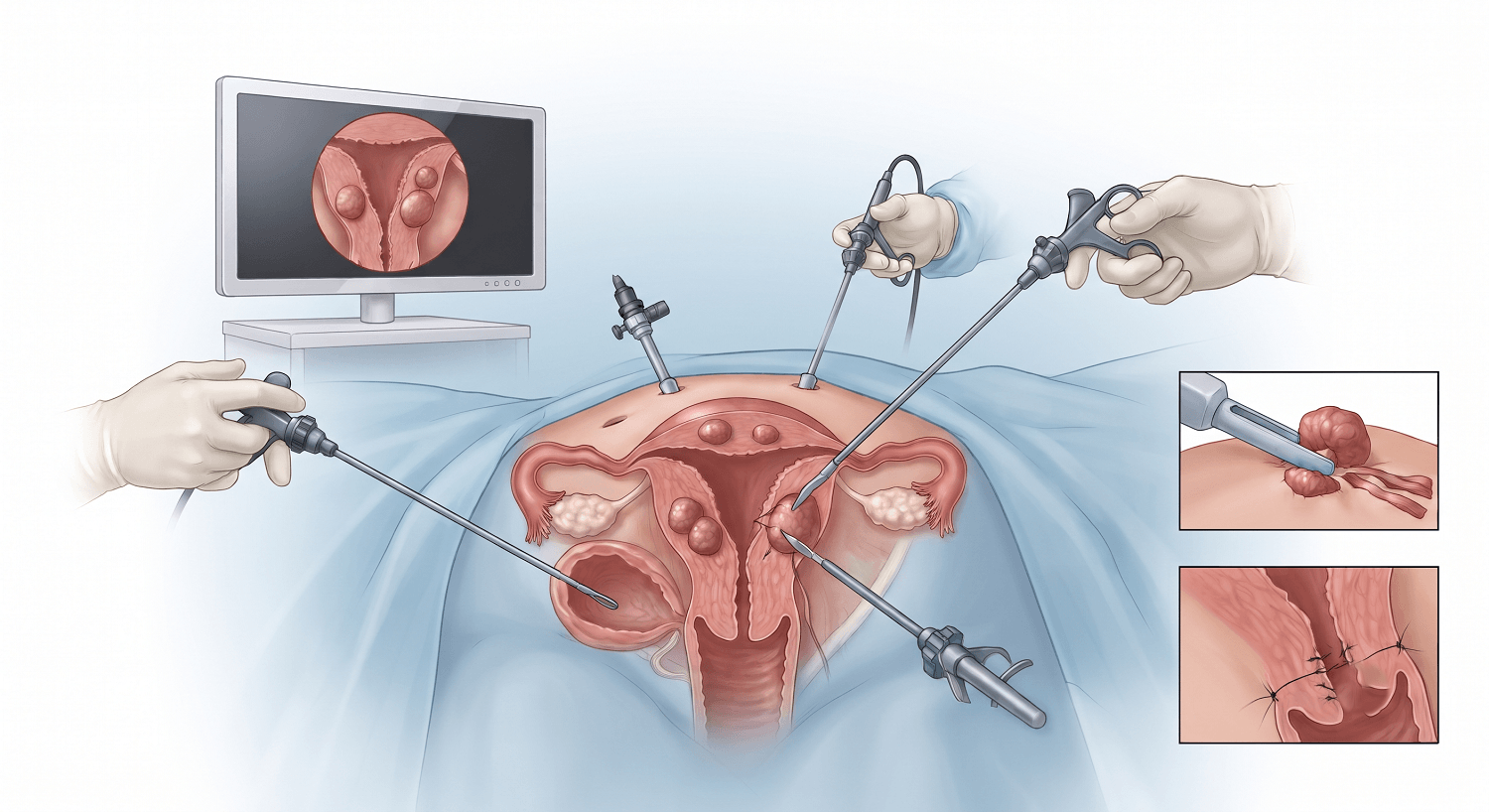
Laparoscopic myomectomy is a minimally invasive surgical procedure used to remove uterine fibroids while preserving the uterus. The procedure is performed using a laparoscope (a thin telescope-like instrument with a camera) and specialised surgical instruments inserted through small incisions in the abdomen, avoiding the need for a large open incision. It is often considered by women who wish to retain their uterus, particularly those who want to preserve their fertility.
The suitability of laparoscopic myomectomy depends on several individual factors, including the number, size, and location of the fibroids, previous abdominal or pelvic surgeries, overall health, and the patient’s fertility goals.
When is Laparoscopic Myomectomy Considered?
Laparoscopic myomectomy may be considered for women with conditions such as:
- Uterine fibroids causing heavy or prolonged menstrual bleeding.
- Fibroids causing pelvic pain, pressure, or discomfort.
- Fibroids affecting fertility or contributing to pregnancy complications.
- Fibroids causing pressure symptoms on the bladder or bowel.
- Fibroids that are appropriately sized and positioned for a minimally invasive surgical approach.
- Women who wish to preserve the uterus and, where relevant, their fertility.
Before recommending the procedure, the doctor may evaluate:
- The number, size, and location of the fibroids on ultrasound or other imaging.
- The depth of fibroids within the uterine wall.
- Previous abdominal or pelvic surgical history.
- Overall health and fitness for surgery.
- The patient’s age, fertility goals, and reproductive plans.
- Alternative treatment options, where applicable.
A detailed evaluation helps determine whether laparoscopic myomectomy is a suitable and safe option compared to other surgical approaches.
What Happens During Laparoscopic Myomectomy?
Before the procedure, the doctor reviews the patient’s medical history and relevant imaging to assess the number, size, and location of the fibroids. The procedure is performed under general anaesthesia.
During surgery, a few small incisions are made in the abdomen, through which a laparoscope and specialised instruments are inserted. The fibroids are carefully separated from the surrounding healthy uterine muscle and removed. The uterine wall is then repaired in layers to restore its strength and integrity. The removed fibroid tissue is typically cut into smaller pieces within a containment bag and extracted through one of the small incisions.
The exact surgical technique depends on the number, size, and location of the fibroids, as well as the surgeon’s clinical assessment.
Recovery After Laparoscopic Myomectomy
Recovery after laparoscopic myomectomy is generally quicker than open myomectomy, owing to the smaller incisions involved. Patients are generally advised to follow their doctor’s postoperative instructions carefully.
Important aspects of recovery may include:
- Keeping the small incision sites clean and following wound-care instructions.
- Taking prescribed medications for pain relief and infection prevention.
- Gradually resuming daily activities while avoiding heavy lifting or strenuous exertion.
- Allowing adequate time for the uterine muscle to heal before attempting pregnancy.
- Attending scheduled follow-up appointments.
- Discussing when it is appropriate to resume sexual activity and, if relevant, attempts at pregnancy.
Your doctor will provide personalised guidance based on your recovery and overall health.
FAQs
1. Will laparoscopic myomectomy affect my ability to have children?
In most cases, the uterus is preserved and repaired to maintain its structural integrity, allowing for the possibility of future pregnancy. However, this can depend on factors such as the number, size, and location of the fibroids removed. Your doctor can discuss this in more detail based on your individual case.
2. How long does it take to recover after laparoscopic myomectomy?
Recovery time varies from person to person, but many women are able to resume light daily activities within a couple of weeks, with full recovery and healing of the uterine muscle generally taking somewhat longer. Your doctor will guide you based on your individual healing progress.
3. Can fibroids grow back after laparoscopic myomectomy?
It is possible for new fibroids to develop over time, particularly in women with multiple fibroids at the time of surgery. Regular follow-up and monitoring can help detect any recurrence early.
4. How long should I wait before trying to conceive after laparoscopic myomectomy?
Your doctor will advise on the appropriate waiting period based on the depth and extent of the uterine incision, to allow adequate healing of the uterine wall before pregnancy is attempted.
5. Will I need a caesarean delivery if I become pregnant after laparoscopic myomectomy?
This depends on the extent and location of the uterine repair. In cases where the uterine wall has been significantly incised, your doctor may recommend a planned caesarean delivery to reduce the risk of complications during labour.