

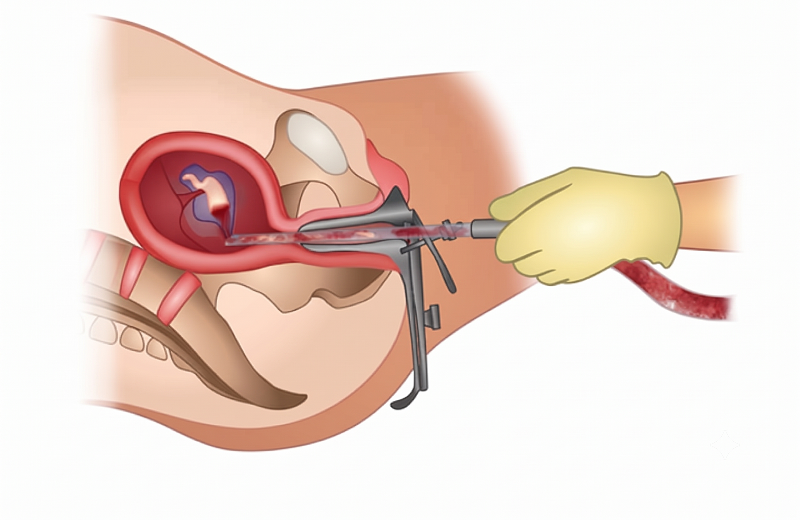
Dilatation and Curettage, commonly known as D&C, is a minor surgical procedure in which the cervix is gently dilated (widened) and a special instrument is used to remove tissue from the lining of the uterus. It is commonly performed to diagnose or treat abnormal uterine bleeding, to remove remaining tissue after a miscarriage or incomplete abortion, or to obtain a tissue sample for further evaluation.
How to Prepare for D&C
Your doctor may recommend certain blood tests or imaging before the procedure to assess your overall health and uterine condition. You will typically be asked to fast for a few hours if general or sedation anesthesia is planned, and to arrange for someone to accompany you home afterward. Inform your doctor of any medications, allergies, or existing health conditions, especially blood thinners, in advance.
What Happens During D&C
The procedure is usually performed under local, regional, or general anesthesia, depending on individual circumstances. The doctor gradually dilates the cervix using a series of thin rods, then inserts a curette (a spoon-shaped or suction instrument) to gently remove tissue from the uterine lining. The collected tissue may be sent to a lab for further analysis if needed. The entire procedure usually takes about 10–20 minutes, and most women can go home the same day.
Benefits of D&C
- Effective in diagnosing the cause of abnormal or heavy uterine bleeding.
- Helps clear retained tissue after miscarriage or incomplete abortion, reducing infection risk.
- Minimally invasive with no abdominal incision.
- Quick procedure with typically short recovery time.
- Can provide immediate relief from symptoms in many cases.
However, the suitability of D&C depends on the underlying condition, and your doctor will confirm if it is the appropriate option for you.
D&C vs Hysteroscopy
While D&C removes tissue from the uterine lining without direct visualization in traditional cases, hysteroscopy allows the doctor to actually see inside the uterus using a camera. Often, doctors combine hysteroscopy with D&C (hysteroscopy-guided D&C) for more accurate and targeted tissue removal. Your doctor will decide the best approach based on your specific condition and diagnostic needs.
FAQs
1. Is D&C a painful procedure?
Since D&C is usually performed under local, regional, or general anesthesia, discomfort during the procedure itself is minimal. Some mild cramping and spotting may occur for a day or two afterward, similar to menstrual cramps.
2. How long does recovery take after a D&C?
Most women recover within a few days and can resume normal activities within 1–2 days. However, it’s advisable to avoid strenuous activity, heavy lifting, and sexual intercourse for about 1–2 weeks, or as advised by your doctor.
3. Will D&C affect my future fertility?
In most cases, D&C does not affect future fertility. It is generally considered a safe procedure, though repeated D&C procedures in rare cases may carry a small risk of uterine scarring (Asherman’s syndrome), which your doctor can discuss with you.
4. When is D&C recommended after a miscarriage?
D&C may be recommended if the body does not naturally pass all pregnancy tissue after a miscarriage, to prevent infection or heavy bleeding. Your doctor will determine if this is necessary based on ultrasound findings and your symptoms.
5. How soon will I get the test results if a biopsy was taken?
If tissue was sent for lab analysis, results are usually available within a few days to two weeks, depending on the lab and type of testing required. Your doctor will discuss the findings and any next steps during a follow-up visit.