

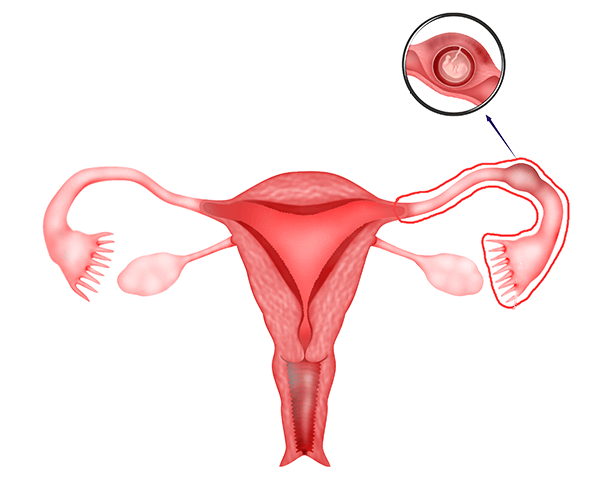
An ectopic pregnancy occurs when a fertilised egg implants outside the uterine cavity, most commonly within the fallopian tube. As this condition can lead to serious complications, including internal bleeding, it is considered a gynaecological emergency requiring prompt diagnosis and treatment. Laparoscopic surgery is a minimally invasive approach commonly used to manage ectopic pregnancies, particularly when the patient is clinically stable.
The suitability of laparoscopic management depends on several individual factors, including the location and size of the ectopic pregnancy, the patient’s clinical stability, hormone (beta-hCG) levels, whether the fallopian tube can be preserved, and the patient’s future fertility goals.
When is Laparoscopic Management of Ectopic Pregnancy Considered?
Laparoscopic surgery may be considered for women with:
- Confirmed ectopic pregnancy on ultrasound, typically within the fallopian tube.
- Symptoms such as abdominal or pelvic pain, with or without vaginal bleeding.
- Rising or plateauing beta-hCG levels not consistent with a normal intrauterine pregnancy.
- Ectopic pregnancy that is not suitable for or has not responded to medical management.
- Signs of tubal rupture or internal bleeding requiring surgical intervention.
- A haemodynamically stable condition suitable for a laparoscopic approach.
Before recommending the procedure, the doctor may evaluate:
- Ultrasound findings, including the location and size of the ectopic pregnancy.
- Serial beta-hCG levels.
- The patient’s overall clinical condition and stability.
- Previous ectopic pregnancy or tubal surgery, if any.
- The condition of the affected fallopian tube and the possibility of preserving it.
- The patient’s future fertility goals.
A prompt and detailed evaluation helps determine whether laparoscopic management is the most appropriate and safe option.
What Happens During Laparoscopic Management of Ectopic Pregnancy?
Given the urgent nature of this condition, the doctor reviews the patient’s symptoms, hormone levels, and imaging findings as quickly as possible. The procedure is performed under general anaesthesia.
During surgery, a few small incisions are made in the abdomen, through which a laparoscope and specialised instruments are inserted. The ectopic pregnancy is identified, typically within the fallopian tube, and one of two main approaches is used:
- Salpingostomy: An incision is made in the fallopian tube to remove the ectopic pregnancy while preserving the tube itself.
- Salpingectomy: The affected segment of the fallopian tube, or the entire tube, is removed along with the ectopic pregnancy, usually when the tube is significantly damaged or ruptured.
The choice between these approaches depends on the condition of the tube, the extent of damage, and the surgeon’s clinical judgement at the time of surgery.
Recovery After Laparoscopic Management of Ectopic Pregnancy
Recovery after laparoscopic surgery for ectopic pregnancy is generally quicker than open surgery, owing to the smaller incisions involved. Patients are generally advised to follow their doctor’s postoperative instructions carefully.
Important aspects of recovery may include:
- Keeping the small incision sites clean and following wound-care instructions.
- Taking prescribed medications for pain relief and infection prevention.
- Gradually resuming daily activities while avoiding heavy lifting or strenuous exertion.
- Attending scheduled follow-up appointments, including monitoring of beta-hCG levels until they return to zero.
- Discussing emotional support and future pregnancy planning with the doctor, as needed.
Your doctor will provide personalised guidance based on your recovery and overall health.
FAQs
1. Can I still get pregnant after an ectopic pregnancy?
Yes, many women are able to conceive again after treatment for an ectopic pregnancy, especially if at least one healthy fallopian tube remains. Your doctor can advise on your individual fertility outlook based on the treatment received and the condition of your tubes.
2. Why do I need follow-up blood tests after surgery for ectopic pregnancy?
Follow-up beta-hCG blood tests are important to confirm that all ectopic pregnancy tissue has resolved, particularly after tube-preserving surgery (salpingostomy). Persistently elevated levels may indicate remaining tissue that requires further treatment.
3. Will I need to have the fallopian tube removed?
Not always. Whenever possible and clinically appropriate, the surgeon will try to preserve the fallopian tube. However, if the tube is significantly damaged or ruptured, removal (salpingectomy) may be necessary to prevent further complications.
4. Am I at higher risk of another ectopic pregnancy in the future?
Yes, having had one ectopic pregnancy does increase the risk of another in a future pregnancy, particularly if the affected tube was preserved. Early monitoring in future pregnancies is generally recommended to detect this promptly.
5. How soon can I try to conceive after treatment for an ectopic pregnancy?
Your doctor will advise on an appropriate waiting period, which allows for physical recovery and confirmation that beta-hCG levels have returned to normal. This is generally discussed at your follow-up appointments based on your individual recovery