

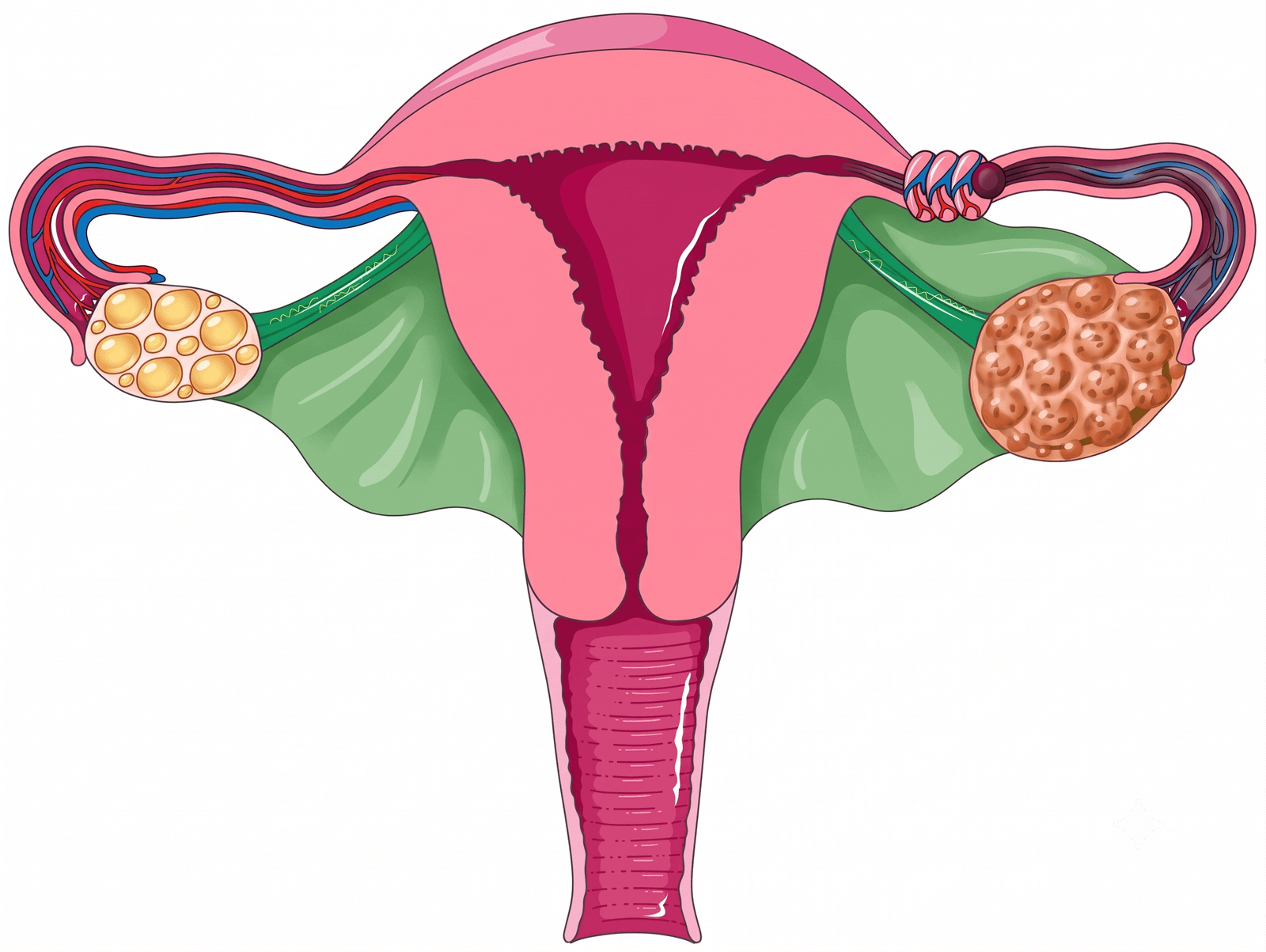
Ovarian torsion is a gynaecological emergency in which the ovary twists around the ligaments that support it, cutting off its blood supply. Surgery for ovarian torsion aims to untwist the ovary and restore blood flow, and where possible, preserve the ovary and its function. Given the risk of permanent damage to the ovary, this condition often requires prompt surgical evaluation and management.
The suitability and type of surgery depends on several individual factors, including the duration of symptoms, the appearance and viability of the ovary at the time of surgery, the presence of an underlying cyst or mass, age, and the patient’s fertility goals.
When is Surgery for Ovarian Torsion Considered?
Surgery for ovarian torsion may be considered for women presenting with:
- Sudden onset of severe, one-sided pelvic or lower abdominal pain.
- Pain associated with nausea or vomiting.
- Imaging findings suggestive of a twisted ovary or reduced/absent blood flow to the ovary.
- An underlying ovarian cyst or mass predisposing to torsion.
- Recurrent or intermittent pelvic pain suggestive of partial or intermittent torsion.
Before proceeding with surgery, the doctor may evaluate:
- The severity, duration, and pattern of symptoms.
- Ultrasound findings, including blood flow to the ovary.
- The likely underlying cause, such as a cyst or mass associated with the torsion.
- Overall health and fitness for emergency surgery.
- Age and fertility goals, which may influence efforts to preserve the ovary.
Given the time-sensitive nature of this condition, a detailed evaluation is often carried out urgently to determine the most appropriate course of action.
What Happens During Surgery for Ovarian Torsion?
Given the emergency nature of this condition, the doctor reviews the patient’s symptoms, examination findings, and available imaging as quickly as possible. The procedure is usually performed under general anaesthesia, most commonly through a laparoscopic approach, although an open approach may occasionally be required depending on the clinical situation.
During surgery, the twisted ovary is carefully identified and gently untwisted (detorsion) to restore blood supply. The ovary is then observed for signs of recovery. If the ovary appears healthy and viable, it is generally preserved. If there is an underlying cyst or mass contributing to the torsion, this may be removed at the same time or at a later stage, depending on the situation. In rare cases where the ovary is severely damaged and non-viable, removal of the ovary (oophorectomy) may be necessary.
The exact surgical approach depends on the duration of torsion, the condition of the ovary, and the surgeon’s clinical judgement at the time of surgery.
Recovery After Surgery for Ovarian Torsion
Recovery after surgery for ovarian torsion depends on the surgical approach used and the extent of the procedure. Patients are generally advised to follow their doctor’s postoperative instructions carefully.
Important aspects of recovery may include:
- Keeping the incision sites clean and following wound-care instructions.
- Taking prescribed medications for pain relief and infection prevention.
- Gradually resuming daily activities while avoiding heavy lifting or strenuous exertion.
- Attending scheduled follow-up appointments, including any recommended imaging to assess ovarian recovery.
- Discussing any further treatment needed for an underlying cyst or condition.
Your doctor will provide personalised guidance based on your recovery and overall health.
FAQs
1. Can the ovary be saved after torsion?
In many cases, yes. Even if the ovary appears discoloured or swollen during surgery, it may still recover its blood supply and function once untwisted. The decision to preserve or remove the ovary is generally made based on its appearance at the time of surgery.
2. Is ovarian torsion a medical emergency?
Yes. Ovarian torsion is considered a gynaecological emergency, as a delay in diagnosis and treatment can lead to permanent loss of the ovary. Prompt medical attention is important if torsion is suspected.
3. How long does it take to recover after surgery for ovarian torsion?
Recovery time varies depending on the surgical approach used and individual factors, but with a laparoscopic approach, many women are able to resume light daily activities within a couple of weeks. Your doctor will guide you based on your individual healing progress.
4. Can ovarian torsion happen again after treatment?
There is a possibility of recurrence, particularly if the underlying cause, such as a cyst, is not treated, or if the ovary remains more mobile than usual. Your doctor may discuss additional measures to reduce this risk, depending on your individual case.
5. Will ovarian torsion affect my fertility?
If the ovary is successfully preserved, fertility is generally not significantly affected, especially if the other ovary is healthy. However, if removal of the ovary becomes necessary, your doctor can discuss how this may impact your overall fertility based on your individual situation.