

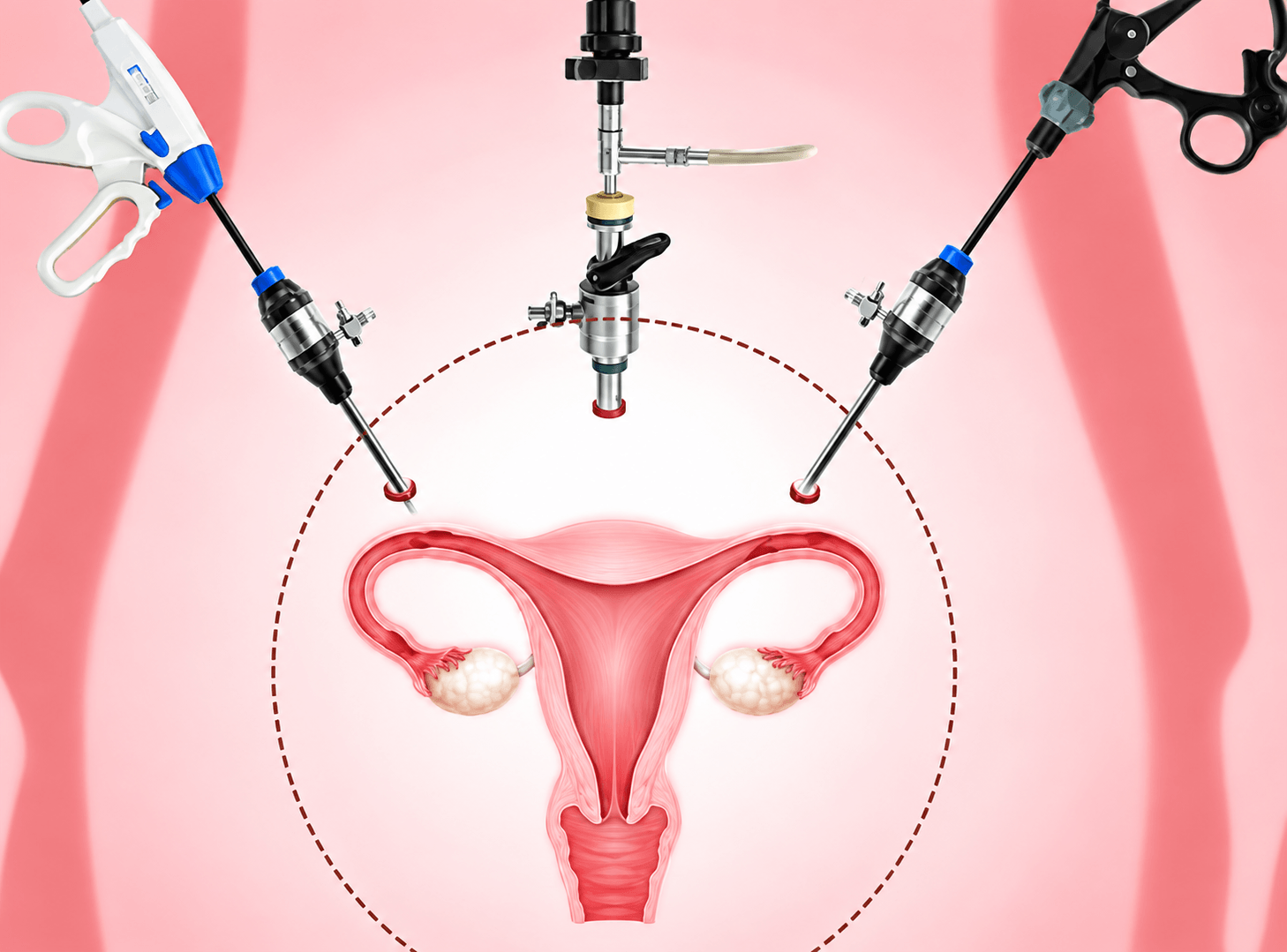
Laparoscopic hysterectomy is a minimally invasive surgical procedure in which the uterus is removed using a laparoscope (a thin telescope-like instrument with a camera) and specialised surgical instruments inserted through small incisions in the abdomen. This approach avoids the need for a large abdominal incision and is often associated with reduced postoperative pain, shorter hospital stay, and quicker recovery.
The suitability of laparoscopic hysterectomy depends on several individual factors, including the size and mobility of the uterus, the underlying medical condition, previous abdominal or pelvic surgeries, overall health, and the surgeon’s expertise with minimally invasive techniques.
When is Laparoscopic Hysterectomy Considered?
Laparoscopic hysterectomy may be considered for women with conditions such as:
- Uterine fibroids
- Abnormal or heavy uterine bleeding not responding to other treatments
- Endometriosis or adenomyosis
- Chronic pelvic pain related to uterine conditions
- Early-stage gynaecological cancers, in select cases
- Cases where vaginal hysterectomy is not suitable but a minimally invasive approach is preferred over open surgery
Before recommending the procedure, the doctor may evaluate:
- The size and mobility of the uterus.
- The nature and severity of the underlying condition.
- Previous abdominal or pelvic surgical history.
- Overall health and fitness for surgery, including suitability for general anaesthesia.
- Whether the ovaries and/or fallopian tubes should also be removed.
- Alternative treatment options and surgical approaches, where applicable.
A detailed evaluation helps determine whether laparoscopic hysterectomy is a suitable and safe option compared to other surgical techniques.
What Happens During Laparoscopic Hysterectomy?
Before the procedure, the doctor reviews the patient’s medical and surgical history and conducts relevant investigations to assess the uterus and pelvic anatomy. The procedure is performed under general anaesthesia.
During surgery, a few small incisions are made in the abdomen, through which a laparoscope and specialised instruments are inserted. The uterus is carefully separated from its surrounding ligaments and blood vessels using these instruments, and it is then removed either through the vagina or, if needed, through one of the small abdominal incisions. Depending on clinical need, the fallopian tubes and/or ovaries may also be removed at the same time.
The exact surgical technique depends on the underlying condition, uterine size, and the surgeon’s clinical assessment.
Recovery After Laparoscopic Hysterectomy
Recovery after laparoscopic hysterectomy is generally quicker than abdominal hysterectomy, owing to the smaller incisions involved. Patients are generally advised to follow their doctor’s postoperative instructions carefully.
Important aspects of recovery may include:
- Keeping the small incision sites clean and following wound-care instructions.
- Taking prescribed medications for pain relief and infection prevention.
- Gradually resuming daily activities while avoiding heavy lifting or strenuous exertion.
- Avoiding sexual intercourse until cleared by the doctor.
- Attending scheduled follow-up appointments.
- Discussing when it is appropriate to resume normal activities, including work and exercise.
Your doctor will provide personalised guidance based on your recovery and overall health.
FAQs
1. How long does a laparoscopic hysterectomy take?
The duration of surgery varies depending on individual factors such as uterine size and the complexity of the case, but it is generally comparable to or slightly longer than open surgery due to the technique involved. Your surgeon can provide a more specific estimate based on your evaluation.
2. How many incisions are made during laparoscopic hysterectomy?
Typically, a few small incisions (usually around 0.5 to 1 cm each) are made in the abdomen to allow for the laparoscope and surgical instruments.
3. How long does it take to recover after a laparoscopic hysterectomy?
Recovery time varies from person to person, but many women are able to resume light daily activities within a couple of weeks, with full recovery generally taking somewhat longer. Your doctor will guide you based on your individual healing progress.
4. Is laparoscopic hysterectomy safer than open (abdominal) hysterectomy?
Both approaches are considered safe when performed by an experienced surgeon for appropriately selected patients. Laparoscopic hysterectomy generally involves smaller incisions and quicker recovery, but suitability depends on individual factors, and your gynaecologist will help determine the most appropriate approach for your condition.
5. Will I still have periods after a laparoscopic hysterectomy?
No. Since the uterus is removed during hysterectomy, menstrual periods stop permanently. If the ovaries are preserved, hormonal function may continue, but there will be no monthly bleeding.